

Table of Contents
- Understanding the Price-to-Value Question
- How to Evaluate Gadget Quality Before You Buy
- Where Expensive Gadgets Actually Outperform Budget Alternatives
- When to Splurge on Electronics: Categories That Matter
- Depreciation, Resale Value, and Long-Term Cost of Ownership
- Consumer Rights for Faulty Tech and Warranty Protection
- Expensive Gadgets Worth Your Investment
Understanding the Price-to-Value Question
When you're deciding whether expensive gadgets are worth buying, you're really asking: does the extra cost deliver proportional benefit? The answer isn't simple because it depends entirely on your use case, how long you'll keep the device, and what "value" actually means to you.
Expensive gadgets command premium prices for reasons that range from genuine engineering superiority to brand positioning. The trick is distinguishing between the two. A £500 pair of wireless earbuds isn't automatically five times better than a £100 pair, but in specific scenarios, they might be worth every pound. What matters is alignment: matching the right device to your actual needs.
The price-to-performance ratio tells you something useful, but it's incomplete. A budget gadget might deliver 80% of the functionality at 40% of the cost. That's exceptional value. But if you use that device eight hours daily for five years, the cost per use becomes trivial compared to the frustration of dealing with poor build quality, limited battery life, or software that lags behind your needs. This is where premium products often justify their premium prices.
How to Evaluate Gadget Quality Before You Buy
Before spending significant money on any tech, you need a framework for assessment. Build quality matters more than most people realise. Run your hands over the materials, are there gaps between panels? Does the device feel solid or slightly loose? Premium products typically use metal frames, reinforced hinges, and tightly-fitted components. Budget alternatives often rely on plastic construction and visible manufacturing shortcuts.
Battery longevity is another critical signal. Check independent reviews that measure real-world battery performance, not manufacturer claims. The Friendie AIR Focus ANC earbuds, for example, deliver consistent performance across multiple charge cycles. A device that holds 80% of its battery capacity after two years of daily use is worth more than one that drops to 60% in the same timeframe.

Warranty coverage reveals manufacturer confidence. Premium products typically come with extended warranties, sometimes two to three years, because the manufacturer expects them to last. Budget gadgets often ship with one-year coverage or less. Longer warranties suggest the company stands behind durability claims.
Look at user feedback patterns, not just ratings. A device with 4.2 stars averaging 1,000 reviews tells you more than one with 4.8 stars from 50 reviews. Scan the negative reviews specifically. Do complaints centre on design flaws or user error? Are there recurring issues mentioned across multiple reviews? Common failures, like battery problems, connectivity drops, or software crashes, are red flags that suggest the gadget won't age well.
Where Expensive Gadgets Actually Outperform Budget Alternatives
Performance gaps exist in specific dimensions. Processing power, for instance, matters enormously if you're doing demanding work, video editing, 3D rendering, or running complex applications. A budget processor might handle basic tasks fine, but it'll bottleneck the moment you push it. Premium devices with higher-tier chips deliver dramatically faster performance in these scenarios. The difference between "slow but functional" and "genuinely fast" compounds over time. You spend less time waiting, which adds up to real hours saved monthly.
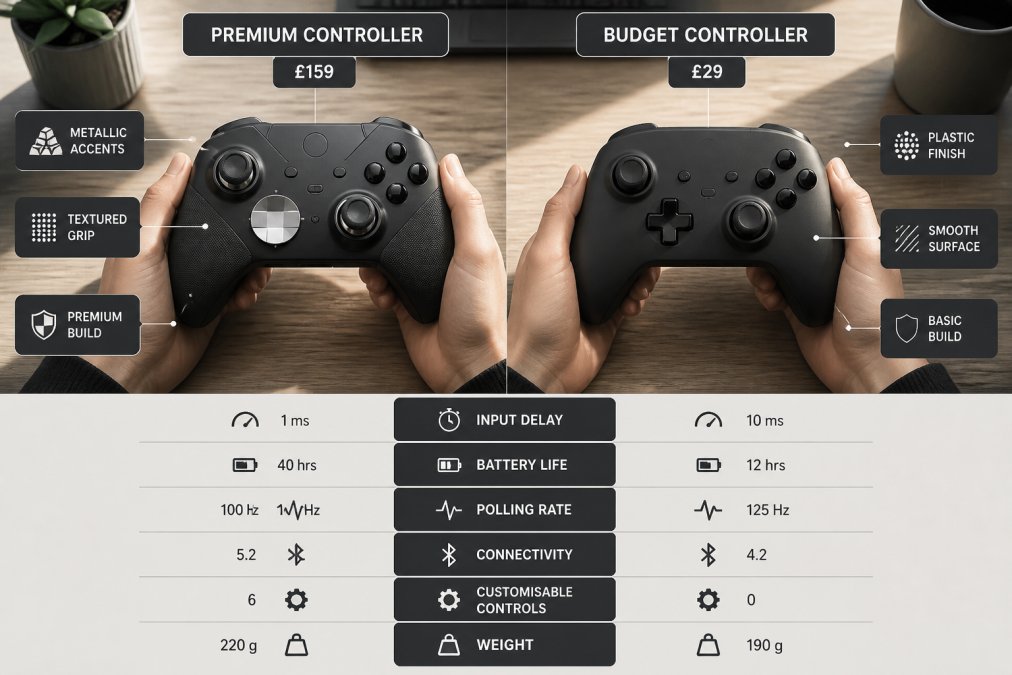
Audio quality reveals another gap. Expensive headphones and earbuds use better drivers, superior noise isolation, and more sophisticated tuning. The Xbox Elite Wireless Controller Series 2 demonstrates this principle beyond audio, it offers adjustable thumbsticks and customisable sensitivity that budget controllers can't match. For serious gamers, these features directly affect performance and comfort during long sessions. Budget alternatives force you to accept fixed designs that might not suit your grip or playstyle.

Thermal management separates premium devices from budget ones. Expensive gadgets dissipate heat more effectively through better materials and engineering. This means sustained performance without throttling. A budget device might run fast initially but slow down under load as temperatures rise. Over months and years, superior thermal design extends component lifespan and maintains consistent performance.
Display quality, brightness, colour accuracy, refresh rate, shows dramatic differences at price extremes. Premium screens maintain brightness in direct sunlight, display accurate colours for creative work, and offer higher refresh rates that make scrolling feel buttery smooth. Budget screens often wash out in bright conditions, show colour shifts at angles, and refresh at lower rates. If you spend 8-10 hours daily looking at that screen, the difference compounds into genuine eye strain versus comfort.
When to Splurge on Electronics: Categories That Matter
Certain gadget categories justify premium spending more than others. Daily-use devices, items you interact with multiple hours every day, deserve investment. Your smartphone, laptop, headphones, and mattress fall into this category. The cost-per-use calculation changes the math dramatically. A £1,000 device used 12 hours daily for five years costs roughly £0.14 per hour of use. That same device used 2 hours daily costs £0.68 per hour. When usage is high, premium quality becomes economical.
Smart home devices that control your environment, heating, lighting, security, also justify premium investment. These run 24/7. The Black Glass Panel Heater with WiFi Controls represents this category well: reliable heating with smart controls that integrate into your home ecosystem. Cheap alternatives often have connectivity issues or fail to hold settings properly.
Wearable tech for health tracking deserves serious consideration. Budget fitness trackers often miscount steps, drop Bluetooth connections, and fail to sync data reliably. Premium wearables use better sensors, more stable connectivity, and software that actually learns from your patterns. If you're using the device to monitor health metrics, accuracy matters. A device that consistently undercounts your activity isn't just frustrating, it's useless for its intended purpose.

Gaming peripherals reward premium investment if you game seriously. Budget mice lag, cheap keyboards fail, and low-end controllers drift. The Xbox Elite Wireless Controller Series 2 costs more than standard controllers, but the customisable sensitivity, adjustable thumbsticks, and 40-hour battery life address genuine pain points for competitive gamers. If you're playing ranked matches or long gaming sessions, these features directly impact your experience and performance.
Depreciation, Resale Value, and Long-Term Cost of Ownership
Premium gadgets often retain value better than budget alternatives. A high-end laptop might depreciate 30% in year one, then stabilise. A budget laptop might lose 40% in the same period and continue dropping. Over a three-year ownership period, the premium device's resale value often offsets a significant portion of its price premium.
Consider the total cost of ownership, not just purchase price. A device that costs 20% more but lasts twice as long actually costs 40% less per year. Factor in battery replacement costs, repair expenses, and the likelihood of needing service. Premium products typically have lower total ownership costs despite higher initial prices.
Environmental impact matters increasingly. Devices that last longer generate less e-waste. A premium gadget you keep for five years has a lower environmental footprint than replacing a budget device twice in the same period. If sustainability concerns you, longevity becomes a hidden benefit of premium purchases.
Resale marketplaces reward brand reputation and build quality. A used iPhone 15 Pro commands significantly higher prices than a used budget Android phone from the same year. This isn't just brand loyalty, it reflects genuine durability and software support expectations. Premium devices maintain resale value because buyers trust them to keep working.

Consumer Rights for Faulty Tech and Warranty Protection
In the UK, consumer protection law provides baseline guarantees regardless of purchase price (gov.uk). The Consumer Rights Act 2015 requires goods to be of satisfactory quality, fit for purpose, and as described (legislation.gov.uk). These protections apply to all consumer purchases, whether budget or premium.
If a gadget fails within six months, the burden of proof falls on the seller to demonstrate the fault existed before purchase (citizensadvice.org.uk). After six months, the burden shifts to you, you must prove the fault was present at sale. This timeline matters. Premium products with longer warranties shift this burden back to the manufacturer for extended periods, protecting you from unexpected repair costs.
Faulty tech claims require documentation. Keep your receipt, take photos of damage or defects, and document when failures occur. If a device fails prematurely, contact the retailer first, not the manufacturer. UK law requires retailers to provide remedies, repair, replacement, or refund, within a reasonable timeframe. Most retailers aim to resolve issues within 30 days.
Extended warranties offered by retailers differ from manufacturer warranties. Retailer warranties often cover accidental damage and provide faster replacement. Manufacturer warranties typically cover manufacturing defects only. For expensive gadgets, retailer extended warranties sometimes justify their cost, particularly for items prone to accidental damage like smartphones and tablets.
Expensive Gadgets Worth Your Investment
After evaluating quality, use case, and long-term value, certain expensive gadgets consistently justify their premium prices. The Xbox Elite Wireless Controller Series 2 at £94.24 represents premium gaming peripherals that deliver genuine performance advantages for serious gamers. The adjustable thumbsticks and customisable sensitivity address real limitations of standard controllers.
The Friendie AIR Focus ANC wireless earbuds at £46.20 demonstrate that premium audio doesn't require extreme prices. Active noise cancelling at this price point delivers functionality that budget earbuds simply can't match. For commuters and office workers, the noise isolation justifies the premium over cheaper alternatives.
Smart home integration devices like the Black Glass Panel Heater with WiFi Controls at £105.59 reward premium investment through reliability and ecosystem integration. Budget smart heaters often have connectivity issues or fail to maintain consistent temperature. Premium options integrate seamlessly with your existing smart home setup and provide reliable performance over years.
The refurbished Apple iPhone 15 Pro at £1,851.99 represents a different premium consideration: choosing a quality device over budget alternatives. While expensive, the build quality, software support, and longevity justify the investment for users who keep devices for 4-5 years.
Featured Snippet Optimization
Are expensive gadgets worth buying? The answer depends on three factors: your actual use case, how long you'll keep the device, and whether the premium features address your specific needs. A device that costs 50% more but delivers twice the longevity or performance becomes economical through cost-per-use calculations. Budget gadgets suit occasional use and short ownership periods; premium gadgets reward daily use and long-term ownership.
Choosing between expensive and budget gadgets ultimately comes down to matching your needs with your budget constraints. At Gadgetry, we've spent years curating products that deliver genuine value across price points. The most expensive option isn't always the best choice, but neither is the cheapest. Our team identifies gadgets that balance premium features, build quality, and realistic pricing. When you're ready to invest in tech that simplifies your daily routine, Gadgetry offers carefully selected products with fast worldwide shipping and hassle-free returns. Browse our collection and find the gadgets that genuinely improve your life.
Frequently Asked Questions
Q: How do I know if an expensive gadget offers good value for money?
A: Compare the cost-per-use over the gadget's expected lifespan. A premium controller at £94.24 used daily for 3 years costs roughly 9p per use, whereas a budget alternative lasting 18 months costs more per use. Check build quality, warranty length, and user feedback on durability. Premium gadgets often justify their price through superior performance metrics, longer battery life, and better ergonomics, but only if you'll actually use those features regularly.
Q: What are your consumer rights if an expensive gadget breaks or doesn't work as advertised?
A: Under the Consumer Rights Act 2015, you're entitled to a refund, replacement, or repair if goods aren't of satisfactory quality within 30 days of purchase. Beyond 30 days, the burden shifts to you to prove a fault existed at point of sale, though you have up to 6 years to claim (5 years in Scotland). Manufacturer warranties are separate and often shorter. Always keep receipts and check the specific warranty terms before purchasing expensive electronics.
Q: Which categories of gadgets see the biggest performance difference between budget and premium models?
A: Audio equipment (noise-cancelling earbuds), gaming controllers, and smart home hubs show the clearest performance gaps. Premium wireless earbuds deliver superior active noise cancellation and battery longevity. High-end gaming controllers like the Xbox Elite Series 2 offer customisable components and 40-hour battery life versus standard controllers. Smart home devices at the premium tier integrate more reliably across ecosystems. Budget alternatives in these categories often skimp on durability, software support, or core functionality.
Q: Do expensive gadgets actually last longer, or is that just marketing?
A: Durability varies by category. Premium gadgets often use higher-quality materials and components. Your best defence is checking repairability scores, warranty length, and user reports on long-term reliability. Brands that support older devices with software updates and stock spare parts justify premium pricing better than those that don't.
This article was written using GrandRanker

