

Table of Contents
- What Makes Wearable Tech Worth It for Professionals
- Best Wearable Tech for Professionals: Our Top Picks
- Best Smart Rings for Productivity
- Discreet Fitness Trackers for Office Environments
- Wearable Tech for Stress Management at Work
- Data Privacy and Corporate Wearables: What You Should Know
- Which Professional Wearable Should You Choose?
- Conclusion
Last Updated: August 10, 2026
What Makes Wearable Tech Worth It for Professionals
The best wearable tech for professionals monitors heart rate variability, tracks sleep quality, manages smart notifications, and integrates with your existing work tools without looking out of place in a boardroom. The real question isn't "which watch has the best specs?" It's "which device will you still be wearing in six months?" Ergonomics for long-duration wear, discreet design, and data privacy are the three factors most reviews ignore entirely.
According to NHS guidance on workplace health and wellbeing, stress and poor sleep are among the leading causes of workplace absence in the UK. A well-chosen wearable can provide continuous health monitoring that helps you catch patterns before they become problems.
Quick Picks:
- 🏆 Best Overall: Graphite Aluminum Smart Watch, sleek, office-ready, comprehensive
- 📊 Best Daily Tracker: Aluminum Body Smartwatch, lightweight, seamless activity tracking
- 💰 Best Budget: Smart Watch, capable and affordable at £79.99
- 🏊 Best for Active Professionals: Aqua Fitness Band With Dynamic Display, AMOLED screen, fitness-first
Key Features to Prioritise: Battery Life, Design, and Data Privacy
Battery longevity is the feature most professionals underestimate until they're hunting for a charger mid-afternoon. A device that needs daily charging is one you'll start leaving at home.

Discreet design matters more in professional settings than any spec sheet suggests. A watch that looks out of place undermines the impression you've spent years building.
Data privacy for corporate environments is rarely covered. Wearable biometric sensors collect highly personal data, heart rate, sleep patterns, stress indicators, and that data lives somewhere. Before deploying wearables across a team, UK organisations should review their obligations under the UK GDPR, as confirmed by ICO guidance on workplace monitoring. For individuals, check the device manufacturer's data retention and sharing policies before purchase.
Best Wearable Tech for Professionals: Our Top Picks
Choosing the best wearable comes down to four criteria: how it looks in an office setting, how long the battery lasts, what health data it captures, and whether it respects your privacy.
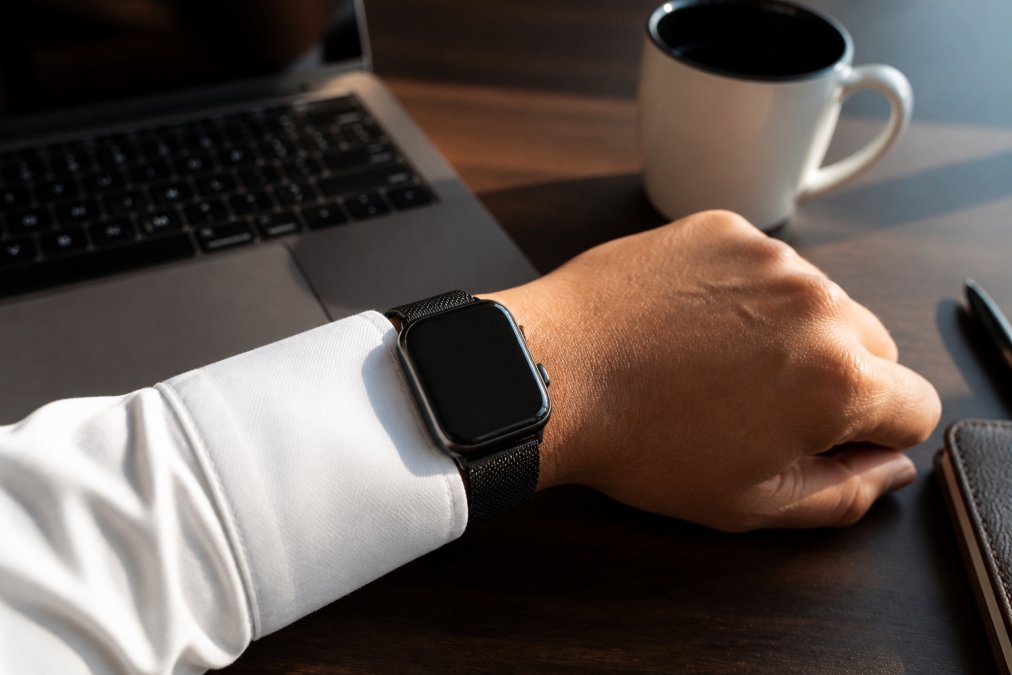
Graphite Aluminum Smart Watch - Best Overall for Office Wear
The Graphite Aluminum Smart Watch at £489.00 is the pick for professionals who refuse to compromise between style and function. Precision-milled graphite aluminum sits discreetly under a shirt cuff while commanding attention when you want it to. This is wearable technology that belongs at a client meeting.
The form factor is genuinely slim. Many smartwatches bulk out under a cuff, creating an awkward ridge that's uncomfortable during long desk hours. This one doesn't. The graphite finish reads as premium without being flashy and pairs equally well with formal and smart-casual office attire.
Pros:
- Discreet, slim profile sits cleanly under a cuff
- Premium graphite finish suits formal and smart-casual environments
- Designed for long-duration wear without discomfort
Cons:
- Higher price point requires commitment
- Best suited to those who prioritise design alongside functionality
Aluminum Body Smartwatch - Best for Seamless Daily Tracking
The Aluminum Body Smartwatch at £399.00 hits a sweet spot between capability and wearability, built from brushed aerospace-grade aluminum that keeps weight down during all-day wear. This is the pick for professionals who want continuous health monitoring without the device feeling like a burden.

Daily activity tracking, smart notifications, and mobile app integration are handled cleanly. Syncing capabilities with both Android and iOS make it ecosystem-agnostic, useful if your team uses mixed devices.
What works: The lightweight build is genuinely noticeable after a full day. Many professionals report that heavier smartwatches cause wrist fatigue by mid-afternoon; the aluminum body avoids this entirely.
Pros:
- Lightweight design reduces wrist fatigue during long workdays
- Compatible with both Android and iOS
- Clean aesthetic suits office environments
Cons:
- Mid-range price still requires budget consideration
- Strap choice affects how formal it reads
Smart Watch - Best Budget Pick for Busy Professionals
The Smart Watch at £79.99 proves that price doesn't equal quality. For under £80, you get fitness tracking, health monitoring, smart notifications, and a device that manages your day from your wrist.

What works: The value-to-function ratio is hard to argue with. Activity tracking, heart rate monitoring, and notification management cover the daily needs of most professionals without requiring a premium subscription.
Pros:
- Exceptional value at £79.99
- Covers core health and fitness metrics
- Good entry point for first-time wearable users
Cons:
- Design is utilitarian rather than premium
- May not suit formal client-facing environments
Aqua Fitness Band With Dynamic Display - Best for Active Professionals
The Aqua Fitness Band With Dynamic Display at £129.00 is built for the professional who runs at lunch, cycles to work, and still needs to track recovery scores before afternoon meetings. The vibrant AMOLED display makes real-time analytics genuinely readable mid-workout. Water resistance means it survives everything from a morning swim to sudden downpours.
What works: The dynamic display stands out in the fitness band category. Many trackers in this price range have screens difficult to read in direct sunlight; the AMOLED panel doesn't have that problem.
Pros:
- Vibrant AMOLED display readable in all conditions
- Water resistant for swimming and outdoor use
- Strong real-time analytics for fitness tracking
Cons:
- Bold colourway may not suit formal office environments
- Fitness-focused design prioritises activity over smart features
Best Smart Rings for Productivity
Smart rings represent the most discreet category in wearable technology. The Oura Ring Gen3 Horizon monitors over 20 biometrics including heart rate, blood oxygen, and skin temperature, delivering daily Readiness, Sleep, and Activity Scores that are genuinely actionable for professionals managing demanding schedules. Battery life reaches up to seven days, significantly better than most smartwatches.
The productivity angle is specific: the Readiness Score tells you whether your body is primed for a high-output day or needs recovery. Having it surfaced automatically changes behaviour. Water resistance to 100 metres means it goes everywhere without thought. Many professionals wear both a ring and a traditional watch.
One caveat: full access to insights requires an Oura Membership subscription on top of the device cost.
| Feature | Smart Ring (Oura Gen3) | Smartwatch |
|---|---|---|
| Discretion | Extremely discreet | Visible on wrist |
| Battery life | Up to 7 days | 1-4 days typically |
| Sleep tracking accuracy | Excellent | Good |
| Workout modes | Limited | Extensive |
| Display | None | Yes |
| Best for | Recovery and sleep | Notifications and fitness |
Discreet Fitness Trackers for Office Environments
The most underserved category in professional wearables is the discreet fitness tracker: a device that delivers meaningful health data without announcing itself in every meeting.

The Withings ScanWatch 2 looks exactly like a traditional analogue watch, with a small digital display hidden within the dial. Up to 30 days of battery life means you're not charging it every other day. ECG capability, SpO2 monitoring, and continuous temperature variation tracking are all present, none of it visible from across a meeting room table.
The WHOOP 4.0 takes a different approach entirely. It's screenless by design, making it genuinely invisible in professional settings. Continuous monitoring of heart rate, skin temperature, and blood oxygen runs in the background. The trade-off: you can't check the time or read notifications. For professionals who want physiological data without any device distraction, it's the most focused option available.
Wearable Tech for Stress Management at Work
Wearable tech for stress management works by measuring physiological indicators of stress, primarily heart rate variability, skin conductance, and skin temperature, and translating them into actionable insights.
The Google Pixel Watch 2 includes a continuous electrodermal activity sensor specifically designed for stress detection. It surfaces stress alerts throughout the day and suggests breathing exercises in response. For professionals who struggle to notice mounting tension until it's already affecting their performance, this real-time feedback is practically valuable.
The Garmin Venu 3 approaches stress through its Body Battery feature, which aggregates heart rate variability, sleep quality, and activity data into a single energy score. A depleted Body Battery before a high-stakes presentation is useful information. Up to 14 days of battery life means continuous tracking without interruption.
Sleep hygiene is directly connected to workplace stress management. Devices that track sleep stages, recovery scores, and resting heart rate trends give professionals data to act on. According to Mental Health Foundation guidance on stress at work, chronic workplace stress is a significant contributor to long-term health conditions. Wearables that provide continuous health monitoring won't solve structural workplace problems, but they give individuals better visibility into their own stress patterns.
Data Privacy and Corporate Wearables: What You Should Know
Data privacy for corporate environments is the conversation most wearable reviews skip entirely. Biometric sensors collect deeply personal data: sleep patterns, heart rate variability, stress indicators, menstrual cycle tracking, blood oxygen levels. This data is transmitted to servers, processed by algorithms, and often shared with third parties.
Under UK GDPR, biometric data is classified as a special category of personal data, requiring explicit consent and a higher standard of protection. The ICO's guidance on special category data is the authoritative reference for UK organisations considering wearable programmes for employees.
Key questions to ask before purchasing any wearable:
- Where is biometric data stored, and in which country?
- Does the manufacturer sell anonymised data to third parties?
- Can you delete your data completely if you stop using the device?
- Is the companion app's data collection covered by a clear privacy policy?
The WHOOP 4.0 and Oura Ring are frequently cited in corporate wellness contexts because their data policies are relatively transparent. No wearable is entirely without data risk; the goal is informed decision-making.
Which Professional Wearable Should You Choose?
The best wearable tech for professionals depends entirely on what you need it to do.
| Wearable | Price | Best For | Battery Life | Discreet? |
|---|---|---|---|---|
| Graphite Aluminum Smart Watch | £489.00 | Office style + smart features | Varies | ✅ Very |
| Aluminum Body Smartwatch | £399.00 | Daily tracking, lightweight wear | Varies | ✅ Yes |
| Smart Watch | £79.99 | Budget-conscious professionals | Good | ✅ Yes |
| Aqua Fitness Band | £129.00 | Active professionals | Good | ⚠️ Bold design |
| Oura Ring Gen3 | £199 - £349 | Sleep, recovery, discretion | 7 days | ✅ Extremely |
| Withings ScanWatch 2 | £269.99 - £319 | Classic design + health tracking | 30 days | ✅ Extremely |
| Garmin Venu 3 | £266.99 - £450 | Fitness + battery longevity | 14 days | ⚠️ Sporty |
| WHOOP 4.0 | ~£20/mo | Physiological data, no distraction | 5 days | ✅ Screenless |
For most office professionals: The Graphite Aluminum Smart Watch is the editorial pick. It balances discreet design, smart features, and build quality without compromise.
For professionals on a budget: The Smart Watch at £79.99 covers the fundamentals well. It's the smartest first wearable purchase you can make.
For those prioritising health data: The Oura Ring Gen3 or Withings ScanWatch 2 deliver the most comprehensive continuous health monitoring in the most discreet form factors available.
For active professionals: The Aqua Fitness Band at £129.00 handles the transition from desk to gym without missing a beat.
The best device is the one you'll actually wear consistently. A £500 smartwatch sitting on your nightstand delivers exactly zero health data. Choose the device that fits your life, not the one with the most impressive spec sheet.
Gadgetry handpicks every product in our wearable tech range for quality, innovation, and genuine daily usefulness. Browse the full collection with fast worldwide delivery and hassle-free returns.
Choosing the right wearable means cutting through a market flooded with fitness-first devices that treat professional needs as an afterthought. Gadgetry curates wearable tech specifically for people who need devices that work as hard as they do, from the discreet Graphite Aluminum Smart Watch to the budget-friendly Smart Watch at £79.99. Fast worldwide shipping, hassle-free returns, and handpicked quality mean you get the right device without the research overhead. Add your pick to cart and start tracking what actually matters.
Frequently Asked Questions
What are the best smartwatches for business professionals in the UK?
The best smartwatches for professionals balance discreet design with practical features like smart notifications, continuous health monitoring, and long battery life. Options range from premium devices with ECG and stress tracking to more affordable picks that cover daily activity tracking and mobile app integration. At Gadgetry, the Graphite Aluminum Smart Watch (£489) and Aluminum Body Smartwatch (£399) are strong choices for professionals who want a wearable that looks at home in the boardroom and on the commute.
Are smart rings worth it for tracking productivity?
Smart rings are worth considering if you want continuous health monitoring without a screen on your wrist. They track biometrics like heart rate variability, sleep quality, and recovery scores discreetly, which suits office environments well. The trade-off is that they offer fewer smart notification features than a full smartwatch. If your priority is passive data accuracy and a low-profile form factor rather than on-wrist alerts, a smart ring is a genuinely useful productivity tool.
Which wearable devices offer the best battery life for long work days?
Battery longevity varies significantly across wearable tech categories. Hybrid smartwatches can last up to 30 days on a single charge, while dedicated fitness bands typically manage 7 to 14 days. Full-featured smartwatches with always-on displays tend to need daily or every-other-day charging. For professionals who travel frequently or simply dislike charging routines, prioritising battery life over screen brightness is a practical trade-off worth making.
Can wearable tech help with stress management at work?
Yes, several wearables include sensors specifically designed for stress management. Electrodermal activity (EDA) sensors detect physiological stress responses, while heart rate variability tracking gives a picture of how well your body is recovering between demands. Some devices pair these readings with breathing exercises or recovery prompts through their companion apps. For professionals in high-pressure roles, wearable tech for stress management can surface patterns that are otherwise easy to ignore during a busy week.
Do professional wearables integrate with Microsoft 365 or Google Workspace?
Most smartwatches running Wear OS offer direct integration with Google Workspace apps, including Calendar, Gmail, and Google Maps. Apple Watch integrates tightly with Microsoft 365 apps like Outlook and Teams via iPhone. Fitness-focused wearables and smart rings typically sync with their own health dashboards rather than productivity suites directly, though calendar notifications are standard across most devices. Check device compatibility with your existing ecosystem before purchasing.
This article was written using GrandRanker

